
What Happened and How a Mophead Caused a Major Problem
Our Crews responded to a significant obstruction deep within Valleyview’s sanitary system – an obstruction that caused wastewater to enter private drainage areas and eventually overflow onto a public street. Although the overflow was highly diluted due to known cross-connections between the storm sewer and water systems, the incident still required attention, investigation, and follow-up work to prevent further issues.
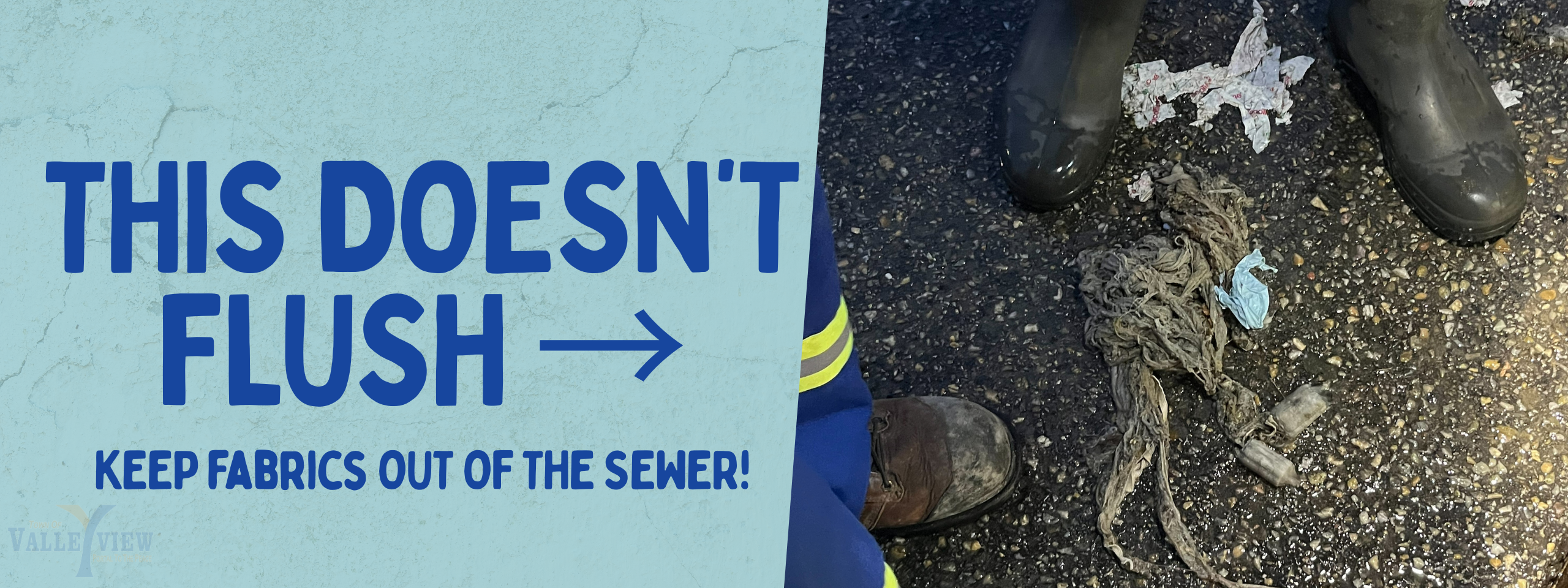
After tracing the source of the blockage, staff located the culprit:
A Mophead lodged tightly inside the sewer main.
The sanitary sewer system is designed to carry only wastewater and toilet paper. When non-flushable items enter the system, they disrupt normal flow:
- Mophead strands do not break down like toilet paper
- They tangle and knot together, catching debris
- The obstruction grows and restricts flow through the pipe
- Pressure builds until wastewater seeks the next available exit point
While the water was significantly diluted, the obstruction still resulted in an overflow and required crews to investigate, flush the line, and assess the affected section of the sanitary main. Incidents like this are disruptive and preventable.
Why Mopheads and Other Fabric Items are Dangerous in the Sewer
Fabric-based items behave like nets once they enter the sewer system. They can:
- Wrap around bends, joints, or existing debris
- Trap fats, oils, wipes, plastics, and solids
- Form large, rope-like blockages
- Put strain on pumps and mechanical equipment
Items that most commonly cause problems include:
- Mop strands, rags, and other cleaning tools
- “Flushable” wipes (which do not dissolve)
- Feminine hygiene products
- Paper towels and shop towels
- Clothing and bedding
- Grease-soaked materials or cleaning pads
When these materials get into the sewer system, the impact can extend well beyond the point of entry – affecting entire sections of pipe, neighbourhoods, and municipal infrastructure.
While this particular overflow was diluted, the consequences still include:
- Deployment of crews to locate and remove the obstruction
- Surface cleanup of the diluted overflow
- Flushing and inspection of the sewer line
- Required environmental reporting
- Assessment of potential infrastructure impacts
- Possible repairs depending on system stress
Each response requires time, labour, and resources from our crews.
How You Can Help Prevent Sewer System Problems
Preventing sewer blockages starts at home an in businesses. The guidelines are simple and make a huge difference:
Only flush the 3 P’s: Pee, Poo, and (Toilet) Paper
Everything else belongs in the trash.
Additional reminders:
- Throw out mopheads, rags, and wipes—they do not belong in the toilet
- Keep grease, fats, and oils out of sinks—they solidify and cause buildup
- Do not pour paint, chemicals, or cleaning residues into drains
- Teach children, tenants, and employees proper disposal habits
- If you’re unsure whether something is flushable, it isn’t
- Pressure from a blockage can build and look for the next available exit point – sometimes this includes private service lines.
Working Together to Protect Valleyview
Our Utility Services team works hard to protect and maintain Valleyview’s sanitary sewer system – often in challenging conditions. You can help reduce blockages and keep our system functioning properly by being cautious about what goes down your drains.
To report sewer concerns or for more information, contact Utility Services: (780) 524-5156